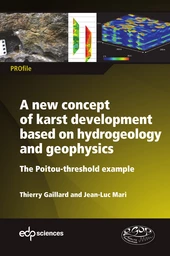



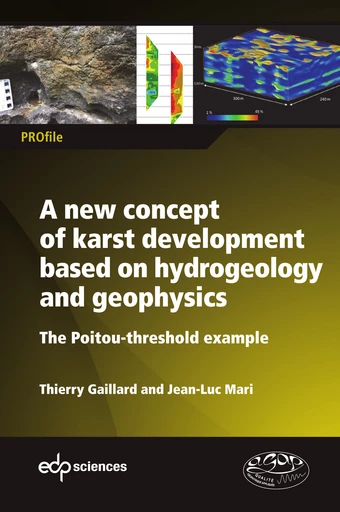
A new concept of karst development based on hydrogeology and geophysics

The Poitou-threshold example

de Thierry Gaillard (auteur), Jean-Luc Mari (auteur)
Collection : PROfil
mars 2026
Référencer ce produit sur votre site

Présentation

Geophysical and hydrogeological investigations are essential for the characterization of aquifers. Drawing on their extensive experience in geophysics applied to the oil and gas industry, as well as in geotechnical and hydrogeological studies, the authors demonstrate how conventional seismic methods—commonly used in exploration and reservoir imaging—can be adapted to hydrogeological investigations, particularly in karstified geological formations. The Dogger limestone of the Poitou Threshold serves as a compelling case study.

This book offers a practical guide on how hydrogeology and geophysics contribute to developing robust regional groundwater flow models. It showcases how an integrated, multidisciplinary geoscientific approach—combining geophysical, hydrogeological, and stratigraphic analyses—can significantly enhance conceptual models of groundwater flow in fractured and karstified media.

The book begins with a geological overview of the Poitou Threshold and provides a detailed synthesis of the Middle Jurassic limestone stratigraphy, establishing the broader regional geodynamic context. It then focuses on the area’s hydrogeology, before presenting the Hydrogeological Experimental Site (HES). Subsequent chapters explore the geophysical and hydrogeological methods employed, emphasizing how a Multiphysics approach can delineate karstic horizons’ geometry.

The book highlights the importance of high-resolution stratigraphic analysis—through core sampling and optical televiewer (OPTV) imaging from open-hole drilling—in mapping the distribution of karstic zones and refining flow models.

More than just a methodological reference, this work encapsulates over two decades of research at the HES. It offers valuable insights into the sustainable management of drinking water resources, stressing the critical role of borehole stratigraphy and well completion design. The collaboration between scientists and engineers presented here exemplifies how applied geophysics can support hydrogeologists, water resource managers, and policymakers in addressing challenges such as groundwater scarcity and contamination.

In addition to the detailed case study of the Dogger limestone, the authors provide a replicable framework for seismic and stratigraphic characterization applicable to a wide range of hydrogeological and reservoir studies. As such, this book serves as both a reference and a teaching tool, ideal for academic courses and professional development programs.

Sommaire

See 'Complements'

Compléments

eBook [PDF]

Caractéristiques

Langue(s) : Anglais

Public(s) : Etudiants, Professionnels, Recherche

Éditeur : EDP Sciences

Collection : PROfil

Publication : 2 mars 2026

Référence eBook [PDF] : L39353

EAN13 eBook [PDF] : 9782759839353

Intérieur : Couleur

Nombre de pages eBook [PDF] : 191

Taille(s) : 9,78 Mo (PDF)

--:-- / --:--